
Interdens: Mono ammonium phosphate protection for rebated hardware
- 04 November 2026
- Blogs
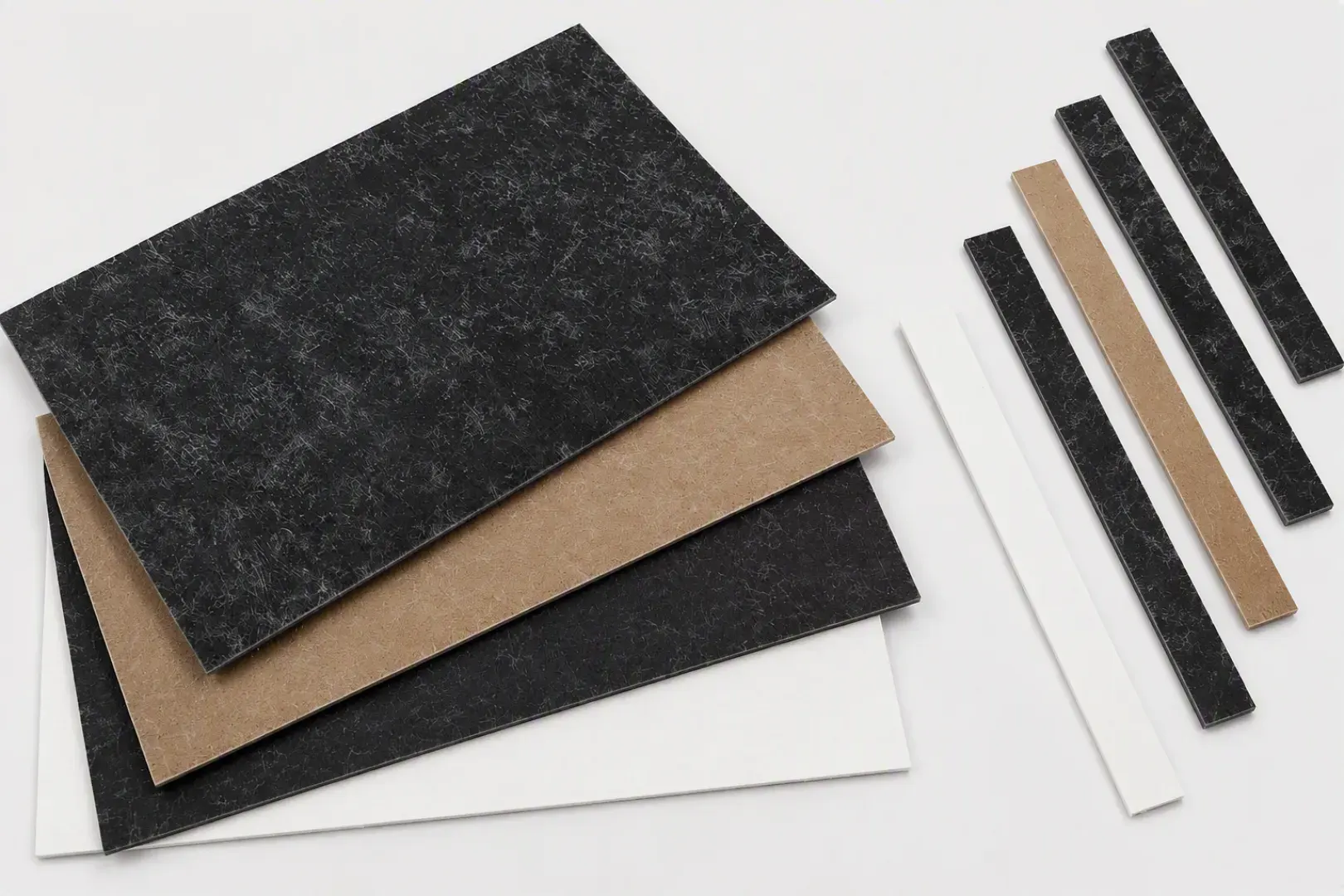
Every lock, hinge or closer fitted into a timber fire door leaves a void behind it. Morticing removes part of the original door material and that recess becomes a weak point in the fire-resisting assembly unless it is properly protected.
Interdens® is an ammonium phosphate-based intumescent material manufactured in Germany by Wolman Wood & Fire Protection GmbH, part of the Sika Group, and converted by Vanquish in the UK. It is designed to improve fire protection around these vulnerable recesses.
With more than 30 years of use, Interdens has an established track record in timber fire doors. It has been used around concealed hinges, mortice locks and door closers in door assemblies designed to achieve fire-resistance ratings of up to 120 minutes, where supported by the relevant test evidence.
This guide explains how Interdens works, how it compares with graphite-based FlexiFire® and how Vanquish converts it into hardware protection kits.
How does Interdens work?
Interdens is a phosphate-based intumescent material incorporating a mineral fibre matrix. When exposed to heat, it uses a two-phase foaming mechanism to produce a microporous, heat-insulating protective layer.
The first phase of expansion begins at approximately 150°C, followed by a further phase at around 300°C. The resulting cellular foam expands into surrounding joints, cavities and gaps. The excellent insulating properties of the resultant foam help restrict heat transfer and seal openings against flames and hot gases.
This is of particular importance around door hardware. During a fire, the timber around a lock or hinge will char and weaken, which speeds up heat transfer through the door. Interdens expands into the available space, helping to maintain the protective barrier.
Pressureless expansion
Interdens forms an insulating foam that spreads into surrounding cavities and crevices without relying on substantial expansion pressure. This is particularly useful where the space between the hardware and the timber is restricted, as it helps minimise the risk of expansion forces distorting surrounding components.
This is not a guarantee that any installation will remain undistorted or achieve a particular fire rating. Performance depends on the complete assembly, including the hardware, door construction, recess dimensions and protection arrangement.
Interdens grades, thicknesses and colours
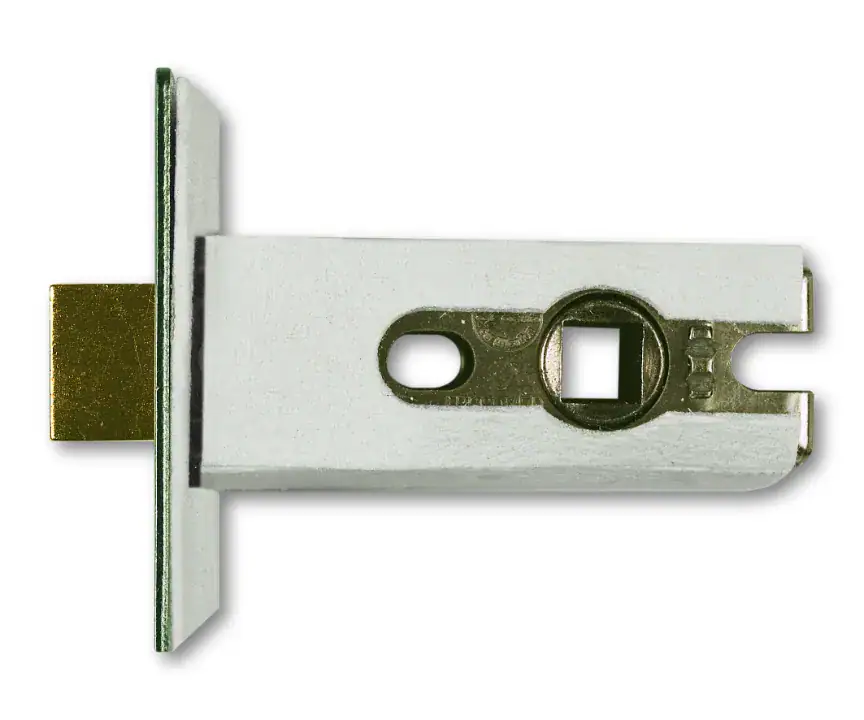
Interdens is available in three principal grades:
- Type 5 — 0.6 mm: a thin material where minimal additional thickness is desirable
- Type 15 — 1.0 mm: a versatile option for a range of hardware protection applications
- Type 36 — 2.0 mm: a thicker option where there is a large void to fill within the mortice
Depending on the grade and test conditions, Interdens delivers very high foaming factors, expanding approximately 25 to 95 times its original volume from a relatively thin starting profile.
A thicker material does not automatically provide a higher fire-resistance rating, so substitutions between grades need supporting technical evidence.
Interdens is available in white, black, brown and red, depending on grade. Colour availability should be confirmed when ordering.
Where is Interdens used in a fire door?
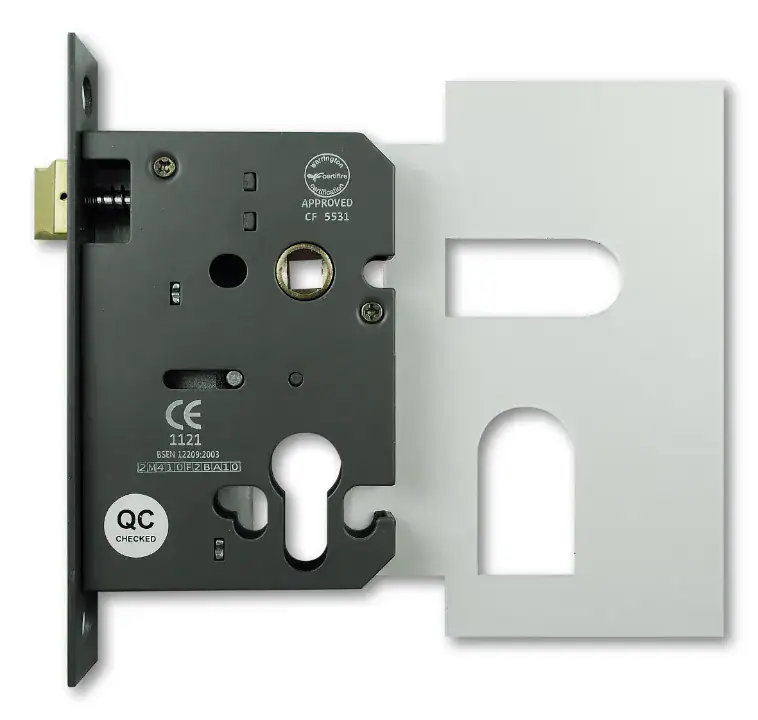
Interdens is particularly well suited to ironmongery protection in timber fire doors. It occupies the space around metal components where the original door construction has been interrupted. Typical applications include:
- Concealed and leaf hinges: protection around hinge recesses, helping limit heat transfer through the mortice
- Mortice locks and latches: liners or kits fitted around lock cases and latch bodies
- Concealed door closers: bespoke protection around closer bodies, where the door system permits
- Access control hardware: protection around compatible recessed electronic locking components
- Drop seals: protection around recessed drop-seal mechanisms, subject to the tested or assessed configuration
- Glazing systems: around glazing apertures where specified within the fire-resisting construction
Interdens may also be used in fire-resisting shutters, cabinets and fire-stopping systems, where supported by the appropriate documentation and evidence.
Selecting the correct Interdens grade for a doorset
As a general starting point, Type 5 may be suitable for some 30-minute applications, Type 15 may be used in 30-minute and certain 60-minute applications and Type 36 may be specified where a 60 or 120-minute fire rating is required.
These are indicative guidelines only. The correct grade, dimensions and arrangement must be established from the relevant fire test evidence, field of application report and any third-party certification requirements. Where the hardware or door manufacturer specifies a particular intumescent kit, those requirements should be followed.
Fire resistance is a property of the tested or assessed doorset, not an individual component. Substituting an alternative material or thickness without justification can compromise the integrity of the complete fire door assembly.
Interdens and graphite intumescent materials: What is the difference?
Interdens and graphite-based materials such as FlexiFire provide intumescent protection through different chemistries. Interdens produces a fine-pored, heat-insulating foam through its two-phase expansion process. Its low activation temperature and pressureless expansion make it particularly useful for recessed hardware, where the material needs to occupy the cavity without high expansion pressure.
When heated, graphite expands to form a swollen, layered char that creates a protective barrier around hardware or within gaps. FlexiFire is supplied in a flexible sheet format that can be converted into profiles and bespoke shapes.
One chemistry is not universally better than the other. A particular lock or hinge may have been tested with Interdens, while another may be supported by graphite-based protection. The material, grade and installation method must remain consistent with the evidence supporting the intended fire door assembly.
Interdens hardware protection kits from Vanquish
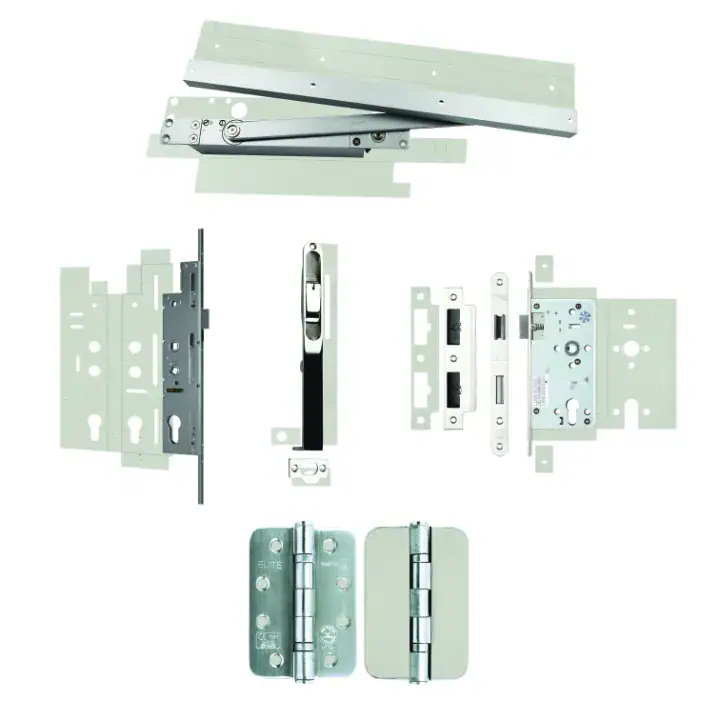
Interdens is supplied to Vanquish as a base material and converted in the UK into hardware protection components, so customers do not need to cut and shape raw sheet material themselves.
Vanquish manufactures standard and bespoke kits for locks, latches, hinges and other compatible rebated hardware, including punched shapes, cut sheets and liners configured to fit each recess. Self-adhesive backing can be specified to simplify positioning during door manufacture.
Vanquish Interdens hardware protection is third-party certified by IFC (International Fire Consultants Ltd) under the SDP20 intumescent protection kits scheme.
Traceability and sheet supply
Traceability is an important part of quality management in fire door manufacturing. Vanquish can add customised traceability printing to its components, subject to the production specification, supporting identification throughout the supply chain.
For customers who prefer to carry out their own conversion, Interdens is also available in sheets up to 2040 × 1000 mm, subject to grade and availability.
Talk to Vanquish about Interdens for your next project
Interdens remains an established solution for protecting rebated hardware in timber fire doors. Its phosphate-based chemistry, two-phase expansion and pressureless foaming make it particularly useful within restricted hardware recesses.
Whichever material you choose, the priority stays the same: the specified material and installation arrangement must suit the tested or assessed fire door assembly.
If you need technical advice on matching Interdens to your doorset’s test evidence, contact the Vanquish technical team on 01725 578020 or at info@vanquish-hp.co.uk.