
BS EN 1634-1: How fire resistance testing works for doorsets and hardware
- 03 November 2026
- Blogs
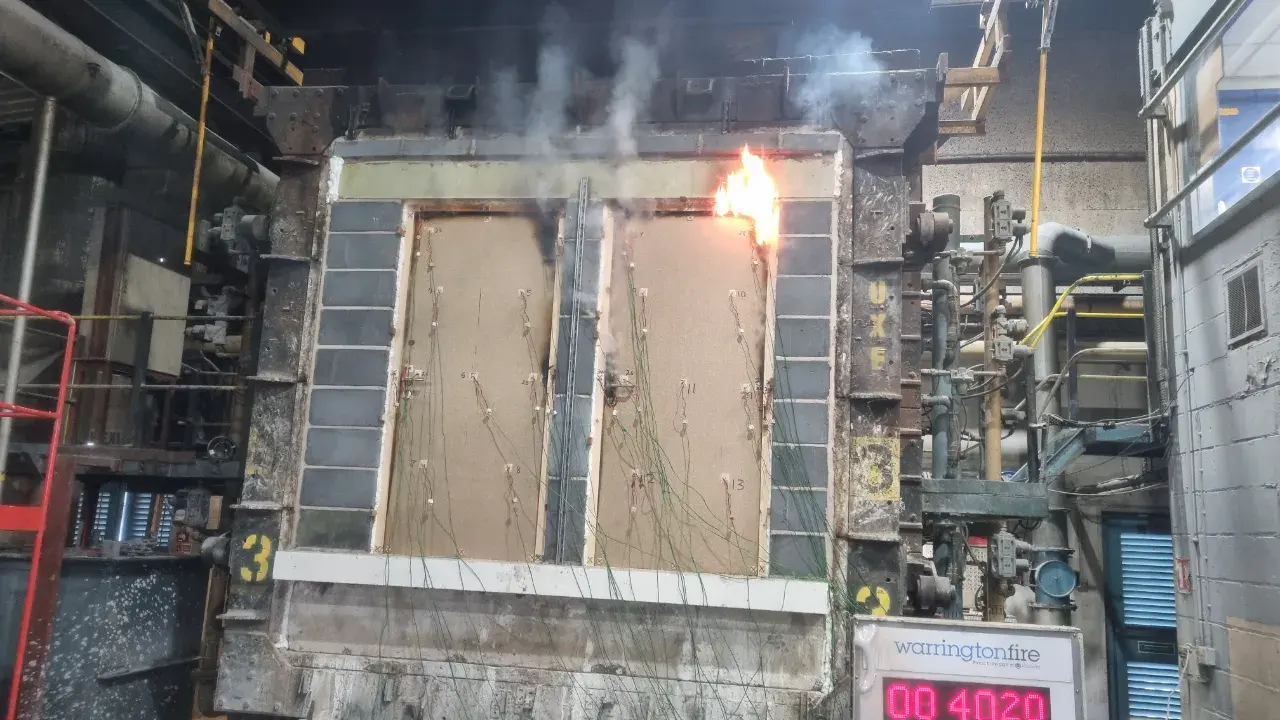
Fire doors play a critical role in passive fire protection, helping to contain fire and restrict the spread of fire through a building. However, a fire door’s performance depends on much more than the door leaf itself. The frame, hinges, locks, latches, intumescent seals and other components all contribute to how the complete assembly performs when exposed to fire.
This is where BS EN 1634-1 comes in. It is the European test method used to evaluate the fire resistance of door and shutter assemblies, including the effects of their hardware and associated components.
What is BS EN 1634-1?
BS EN 1634-1:2014+A1:2018 is the British adoption of the European standard for fire resistance testing of door and shutter assemblies and openable windows. [1]
During testing, a representative doorset/assembly is installed within a supporting construction and exposed to a prescribed heating regime in a specialist furnace. The test procedures assess the assembly’s ability to maintain its fire-resisting function for a specified period of fire exposure.
The results provide evidence of performance under the test conditions. Performance may be expressed in terms of integrity (E), insulation (I) and, where relevant, radiation (W).
- Integrity (E): The ability to prevent flames and hot gases from passing through the assembly in a manner that constitutes failure under the test criteria.
- Insulation (I): The ability to limit temperature rise and heat transfer to the unexposed side of the assembly.
- Radiation (W): The ability to limit heat radiation through the assembly.
A doorset may achieve a particular fire resistance classification, such as E30 or EI30, depending on the criteria satisfied and the duration demonstrated. Fire resistance ratings must reflect the actual test results and the applicable classification rules.
Importantly, BS EN 1634-1 is a test method, not a standalone product certification scheme. Smoke control is assessed separately under BS EN 1634-3, which measures smoke leakage through door assemblies.
Why are doorsets tested as complete systems?
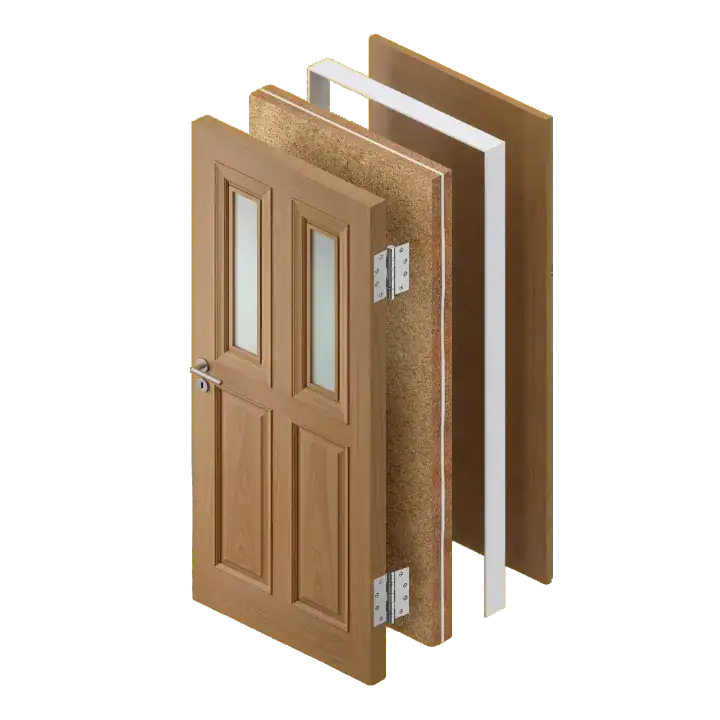
A fire door is a coordinated assembly, and its individual components can interact in ways that significantly affect performance under fire conditions.
For example, a lock requires a cut-out in the door leaf. Hinges introduce fixings and localised stresses that can affect structural integrity, while intumescent seals must respond appropriately to heat and help close gaps that develop as the door and frame are exposed to fire. Changing one component can alter the performance of the whole assembly.
For this reason, BS EN 1634-1 testing evaluates the doorset in a representative configuration, incorporating relevant elements such as:
- The door leaf and its construction.
- The frame and supporting construction.
- Hinges, locks, latches, closers and other specified hardware.
- Intumescent protection around hardware where required.
- Perimeter seals and other relevant sealing components.
- Glazing and apertures, where included in the design.
The dimensions, materials, fixing arrangements, hardware preparation and protection details must be appropriate to the tested design and its permitted field of application.
The fire resistance rating belongs to the tested assembly and the scope of evidence supporting it, not simply to a collection of individual components.

The importance of intumescent hardware protection
Intumescent materials are widely used to protect vulnerable areas around fire door hardware. When exposed to sufficient heat, these materials expand and form a char that can help seal gaps and protect openings created for components such as hinges, locks and flush bolts.
Without suitable protection, these areas can become potential weak points in the doorset.
Intumescent hardware protection, such as Vanquish FlexiFire® and Interdens® products, is designed to mitigate these risks. However, its effectiveness depends on several factors, including:
- The formulation and physical properties of the intumescent material.
- Its thickness, dimensions and installed position.
- The hardware type and geometry.
- The door leaf construction and the size of the hardware cut-out.
- The compatibility of the protection with the tested doorset design.
The critical question is whether the protection performs effectively within the specific doorset construction for which it is intended.
For manufacturers and suppliers, this means ensuring that the proposed hardware protection is supported by appropriate test evidence or a valid assessment covering its intended application. Correct installation matters just as much.
How does BS EN 1634-1 relate to UK certification schemes?
BS EN 1634-1 provides the test methodology, while third-party certification schemes provide an additional framework for demonstrating and maintaining product conformity. In the UK, schemes such as CERTIFIRE and Q-Mark use fire test evidence alongside other requirements to establish the scope of a product’s approved application. [2]
The distinction is important: fire testing demonstrates performance under defined conditions; certification provides additional assurance that the product is manufactured consistently and used within an approved scope.
Where a doorset design changes, the manufacturer or certification body must establish whether the change falls within the existing evidence and permitted scope. Further testing, technical assessment or extended application may be necessary.
Why validation matters as standards and specifications evolve
For hardware protection manufacturers, validating products within recognised test methods such as BS EN 1634-1 helps establish how their materials perform in realistic doorset applications. It also supports informed specification by providing evidence that can be considered alongside the doorset manufacturer’s test reports, assessments and certification documentation.
Vanquish flexible seals are fire resistance tested to EN 1634-1, ambient smoke control tested to EN 1634-3 and linear joint sealing tested to EN 1366-4. Vanquish is also a member of the Intumescent Fire Seals Association.

Conclusion: Fire door performance depends on the whole system
For manufacturers, specifiers and installers, the practical message is clear: select components that are supported by evidence for the intended doorset application, and ensure that any proposed changes remain within the permitted scope of that evidence.
Doing so helps maintain the integrity of the fire door as a complete passive fire protection system, supporting a building’s wider fire safety strategies and protecting occupants as they make their way to safety.
Contact Vanquish now
If you need technical support for hardware protection within a BS EN 1634-1 tested assembly or want to discuss product testing requirements for a specific doorset configuration, contact our team via our technical resources page or explore our FlexiFire hardware protection range.
References
[1] British Standards Institution, BS EN 1634-1:2014+A1:2018.
[2] BWF Fire Door Alliance, Third-party certification of fire doors.