What is intumescent hardware protection?
- 29 September 2026
- Blogs
A fire door only works as well as the hardware fitted into it. Every hole cut for a lock, latch or hinge removes timber from the door leaf. Fill those gaps with the right intumescent material and the door keeps its rating. Leave them unprotected and the door hardware can become the weakest point in the whole assembly.
As a UK manufacturer holding IFC third-party accreditation for intumescent products, Vanquish has spent years supplying the fire protection materials that specifiers, installers and facilities managers rely on to keep fire doors compliant. This guide explains what intumescent hardware protection is, how the chemistry behind it works, and why it plays such a critical role in fire door integrity.
What is intumescent hardware protection?
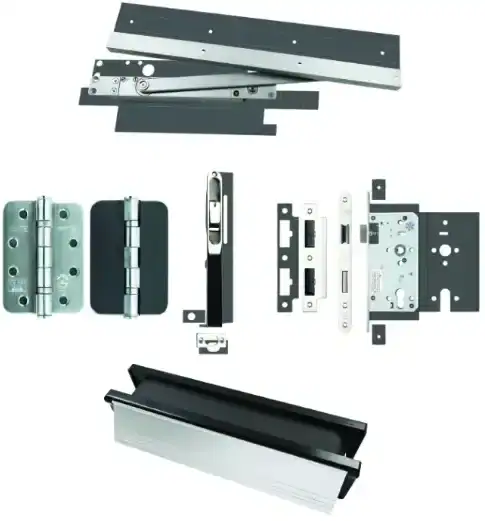
Intumescent hardware protection uses heat-activated material to seal the voids created when locks, hinges, latches and other rebated hardware is fitted to a fire door. Under normal conditions the material sits flat and unnoticed behind the ironmongery.
In the event of a fire, it reacts to heat and expands rapidly, forming a dense insulating char that blocks the passage of heat, flames and smoke through the gap.
Without this protection, metal hardware and the air pockets around it act as a direct route for heat to travel through the door, cutting the time before the doorset reaches integrity failure.
The critical role of hardware in fire door assembly
A fire door is tested and rated as a complete system, not as a single piece of timber. The leaf, frame, seals and door hardware all contribute to the fire resistance of the door, so any weak point in the hardware undermines the rest of the door.
Locks, hinges and latches are metal, and metal conducts heat far more efficiently than timber. Fitting them into a door leaf without intumescent protection creates a shortcut for heat, reducing the door’s ability to hold back fire for its rated period. Intumescent kits close that gap and are considered vital parts of a compliant fire door installation.
How intumescent material expands under heat

“Intumescent” simply means to swell under heat. Vanquish supplies two main intumescent products for hardware protection, each suited to different applications.
FlexiFire®, a graphite-based intumescent sheet, activates at around 180°C and expands between six and twenty times its original volume, with three grades formulated for hinge pads, rebated hardware and letterplate liners
Interdens®, a mono-ammonium phosphate intumescent converted by Vanquish from Wolman Fire Protectors® in Germany, activates at a lower temperature of roughly 150°C and can expands around 45 times its volume, producing a strong insulating foam
Both deliver the same outcome: a char structure dense enough to slow the spread of fire and the spread of smoke through the door.
Why unprotected hinges and standard ironmongery create weakest points
Standard ironmongery fitted without intumescent protection leaves voids around the hardware that heat exploits first. Unprotected hinges sit along the edge of the door leaf where structural movement during a fire can open gaps further, accelerating failure.
Intumescent products across the Vanquish range
Vanquish manufactures intumescent kits for every part of a fire door assembly likely to compromise its rating.
Intumescent hinge pads and lock protection
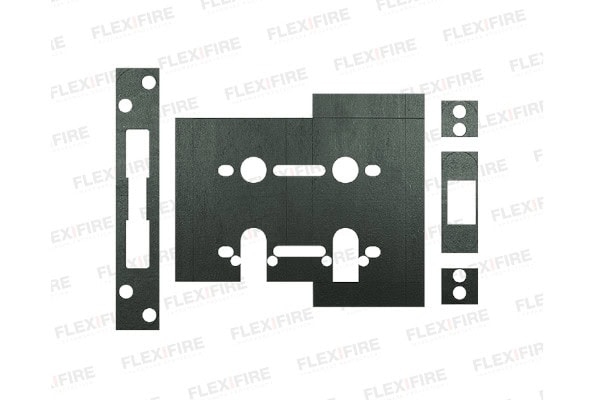
FlexiFire® HP, a PVC compound with moderate graphite content, is built for hinge pads and door viewers. FlexiFire® HS, has a higher graphite content and greater expansion, which is suited to lock protection, latches and concealed closers, where the rebate is deeper and the void larger.
Intumescent kits for letterplates
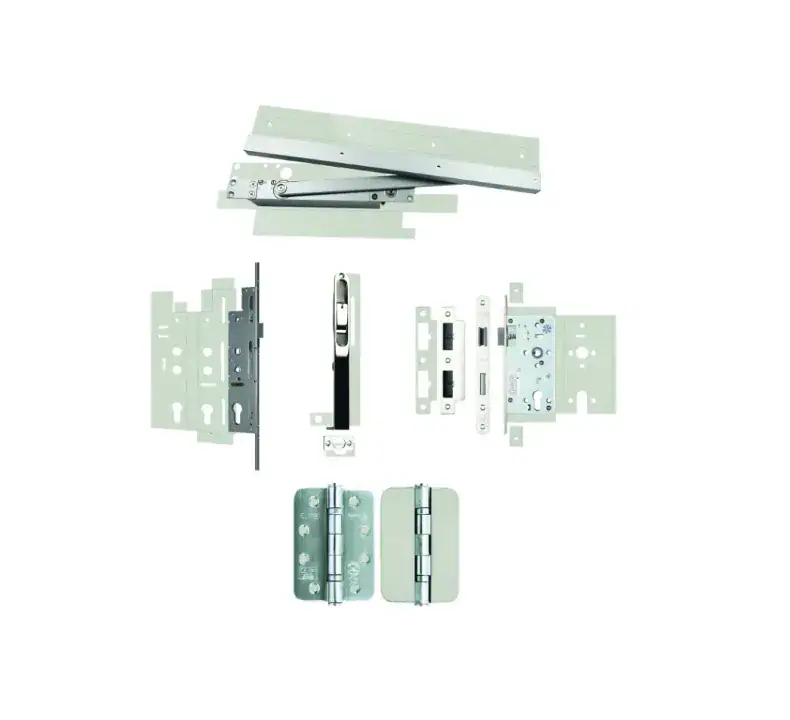
FlexiFire® HE carries the highest graphite content in the range, producing a strong insulating char for letterplate liners and other items of hardware that create large voids.
Interdens® is available in 3 different thicknesses to support application to a wide array of rebated hardware such as hinges, lock and latches but is not suitable for letterplate applications where a pressure forming intumescent such as FlexiFire is typically required.
Certification and technical advice you can trust
Intumescent hardware protection carries no CE or UKCA marking, which makes third-party certification the only reliable check on quality. Vanquish holds IFC certification, covering production audits and printed traceability on every batch. Vanquish is also a member of the Intumescent Fire Seals Association and the GAI and offers technical support for anyone specifying passive fire protection products.

Talk to Vanquish about fire protection solutions
Getting the level of protection right on rebated hardware is not something to guess at. If you need technical advice on intumescent hinge pads, lock protection or a fire protection solution for a non-standard hardware kit, contact the Vanquish technical team.